Consider the story of Adam and Eve.
God created Adam from the dust of the ground, along with all the other pairs of animals, and he brought them before him to see what he'd call them. When it was all done, there was no companion found for Adam, even though all the others came in pairs.
Ever thought about why? Why didn't God create Eve at the same time as Adam? I think it's because he wanted Adam to experience a bit of the same longing in his heart that Jesus had in his. C.S. Lewis noted that hunger, regardless of whether or not it's satisfied, is an indication that food exists. The fact that Adam knew he was incomplete demanded a fulfilling reality somewhere. This did not come from Adam's experience for he had no prior experience of having had this completion. Rather, this ache in Adam was a reflection of God's chosen longing to have a counter-part for his Son.
Once Adam had fully experienced this longing, God put Adam to sleep, took a rib from his side and fashioned Eve. This is a bit odd, compared to the previous way of creating creatures. Why not create Eve the same way? I think it's as a foreshadowing of the church and Christ, where the last Eve also comes forth from the riven side of the last Adam. The blood and water which spilled from Jesus side symbolizes redemption and cleansing. He went through this in order to have a bride, without spot or wrinkle, holy and blameless, a partner with a heart like his.
Monday, September 26, 2005
Adam and Eve

Labels:
Adam,
Bridal Paradigm,
Christianity,
Eve,
Old Testament


Saturday, September 17, 2005
In the beginning...
In looking at the Bridal Paradigm, a good place to start is at the beginning, before time began.
Proverbs 8:22-31In Proverbs, the 'I' here is wisdom personified. The attributes are: eternal, being with God since before anything else was, and a master craftsman at creation. Given the New Testament, I think it's easy to interpret this as Jesus. We know Him as eternal and the agent of creation:
The LORD possessed me at the beginning of His way,
Before His works of old.
From everlasting I was established,
From the beginning, from the earliest times of the earth.
When there were no depths I was brought forth,
When there were no springs abounding with water.
Before the mountains were settled,
Before the hills I was brought forth;
While He had not yet made the earth and the fields,
Nor the first dust of the world.
When He established the heavens, I was there,
When He inscribed a circle on the face of the deep,
When He made firm the skies above,
When the springs of the deep became fixed,
When He set for the sea its boundary
So that the water would not transgress His command,
When He marked out the foundations of the earth;
Then I was beside Him, as a master workman;
And I was daily His delight,
Rejoicing always before Him,
Rejoicing in the world, His earth,
And having my delight in the sons of men.
John 1:1-3
In the beginning was the Word, and the Word was with God, and the Word was God. He was in the beginning with God. All things came into being through Him, and apart from Him nothing came into being that has come into being.
Colossians 1:15-17
He is the image of the invisible God, the firstborn of all creation. For by Him all things were created, both in the heavens and on earth, visible and invisible, whether thrones or dominions or rulers or authorities—all things have been created through Him and for Him. He is before all things, and in Him all things hold together.
Hebrews 1:2b His Son ... through whom ... He made the world.In the Proverbs passage, we see the Father taking delight in the Son and the Son rejoicing before the Father; a mutual glad-hearted, joyful relationship existing in the trinity. The word 'rejoicing' has the connotation of amusement, celebration, joking, laughing, making merry, playing. It's the same word David used to describe his entry into Jerusalem with the ark. (2 Samuel 6:5, 12; 1 Chronicles 13:8, 15:29) It's the same word used to describe people in the streets of Jerusalem when the Lord reigns there. (Zechariah 8:5)
We also see the Son taking delight in the sons of men. This is echoed in 'He chose us in Him before the foundation of the world, that we would be holy and blameless before Him (Ephesians 1:4).' Before creation, He knew us, loved us and chose us.
Later Paul writes 'For this reason a man shall leave his father and mother and shall be joined to his wife, and the two shall become one flesh. This mystery is great; but I am speaking with reference to Christ and the church. (Ephesians 5:31)' It's not that our relationship with Jesus is sort of like a marriage, but the other way around. Marriage is given to us as a shadow of the relationship that Jesus wants with his people.
Labels:
Bridal Paradigm,
Christianity
The Bridal Paradigm
In this series of devotionals, I look at the concept of the Bridal Paradigm, wherein the primary way God relates to us is as a groom to his bride. For me personally, intimacy with God has grown as I've come to understand to a greater degree the passionate love He has for me and this idea of Christ as bridegroom has been foundational in this growth.
Labels:
Bridal Paradigm,
Christianity
Saturday, September 10, 2005
Beauty of holiness
What does the phrase 'Beauty of Holiness' mean?
1st Chronicles 16:29A lifestyle of prayer, either individually or corporately, is primarily maintained by a focus on God's beauty, splendor and holiness with the resulting worship it inspires. This is what captures our hearts and minds; taking the spark of love in our hearts, fanning it, adding fuel and transforming it to a passionate bonfire. In these three passages, David exhorts us in the secret to having a heart after God.
Ascribe to the Lord the glory due his name. Bring an offering and come before him. Worship the Lord in the splendor of his holiness.
Psalm 29:2
Ascribe to the Lord the glory due his name. Worship the Lord in the splendor of his holiness.
Psalm 96:9
Worship the Lord in the splendor of his holiness.
In Song of Songs 5, the friends ask the bride 'Why is your beloved better than anyone else?' The bride's response is a wonderful 6 verse discourse on the beauty of her groom. This description captures the friends' hearts and they then ask 'Which way did he go that we may look for him too?'
Both Isaiah and Revelation depict scenes from around the throne with glorious, beautiful splendor radiating from a holy God and worship going on continuously. We can, and should, join in what is already going on around the throne. We'll be doing it for eternity. There's no need to wait until then to start.
With this focus on gazing on God's beauty, I'm not trying to imply that issued oriented prayer is not good or appropriate. We are told that we have not because we ask not. We are told to ask and keep on asking, knock and keep on knocking, and the door will be opened to us. It's just that I believe it should be secondary. In the disciple's prayer, Jesus taught us to start with 'hallowed by thy name' before moving to 'give us this day.'
In 2 Chronicles 20:21, Jehoshaphat appointed men to sing to the Lord and to praise him for the splendor of his holiness as they went out at the head of the army saying 'Give thanks to the Lord for his love endures forever.'
God then set up ambushes for the enemy before the army got there. When the army arrived at the place of battle, everyone was already dead. It is worshiping God in the beauty of his holiness that prepares us for the battle and releases God's resources ahead of us.
The phrase 'splendor of his holiness' is the NIV translation. Other translations have 'beauty of holiness' without the personal pronoun 'his'. The NIV translators made an interpretive decision here that I think is OK. But I have a problem with it because I don't think it's an exclusive interpretation. By this I mean other interpretations can be made that I think are also equally valid. Specifically, I think it's acceptable to understand this holiness to be the holiness he clothes us with. In other words 'In holiness, worship the Lord.'
Moses face shone after being in God's presence, before His radiance. Paul tells us in 2 Corinthians 3:18 that as we come before God and gaze on his beauty with open hearts, we are transformed from glory to glory. The word for transformed is where we get our word metamorphosis used to describe the change of a caterpillar into a butterfly. Our spiritual "chemical makeup" is changed through an ongoing exposure to God's beauty. As we gaze upon God's beauty in the written word, and as we let the living word reveal God's beauty to our inner man, our minds are changed to understand God's good, acceptable and perfect will (Romans 12:2).
Thomas Dubay in Evidential Power of Beauty speaks about a person's capacity to appreciate the beauty of Beethoven or Shakespeare being something one grows into. Just because someone doesn't have the capacity to comprehend the beauty of Shakespeare doesn't indicate a lack in the Bard's writing, rather it's an indication of immaturity on the part of the recipient. In the same way one progresses from 'Dick and Jane' to 'Midsummer night's dream' by reading increasingly complex material, so do we progress from glory to glory by repeated gazing on God's beauty.
Labels:
beauty,
Christianity,
holiness,
prayer
Friday, September 2, 2005
About me and this blog
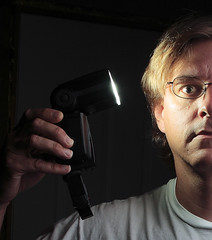 Hi. I'm Harley and I'm a lot of things: Worshiper, Lover of God, Husband, Builder, Reader. These are a few of the words I'd use to describe myself. The Builder moniker has various manifestations which are hopefully guided by the previous self-identifications. Among them are developing software, wood working, auto mechanics, home improvement, playing music, writing and photography. This page is simply to point to some of the other places I write.
I have three blogs:
- The Episodic Author where I write about miscellaneous topics: religion, politics and other random things that strike my fancy.
- Hooked on Light where I discuss photography related things.
- Skylark Software where I discuss software development issues.
I also twitter.
If you're interested in my photography, I have a Flickr stream and I have some images for sale on iStockphoto.